
Showing posts with label Low Body Fat. Show all posts
Showing posts with label Low Body Fat. Show all posts
Thursday, June 28, 2012
Why Does Breakfast Make Me Hungry? (Major Update July 16th)
4:13 PM | Posted by
Unknown |
 Edit Post
Edit Post
“Why does breakfast make me hungry?” When someone asked me that question for the umpteenth time since my methods became popular, I finally decided to indulge in a deeper exploration of what the plausible mechanism might be. I thought I’d share my thoughts on that with you today.
Note: Major Update July 16th and July 17th. See "Closing Point: Addendum" and "Short addendum" at the end of the article, a few P.S's, and a complete list of references.
It’s a fairly lengthy article, but hopefully interesting enough to keep your attention, informative enough to teach you a few things, and decent enough to mark my return back into the love-hate-relationship I maintain with the Internet (…and its potpourri of good and bad, smart and dumb, facts and bullshit).

My heart sank when it seemed they had provided overwhelming evidence for the benefits of breakfast a few months ago. But I proved them wrong.
Why Does Breakfast Make Some People Hungry?
As mentioned, it wasn’t without grounds that the question piqued my curiosity beyond that which could be attributed to food selection. In questionnaires, clients would often note that eating in the morning made them ravenous before noon, and sometimes no more than an hour after a steady breakfast.
On Facebook, in emails, and in casual conversation, anecdotes to a similar effect kept popping up too frequently to be explained by mere coincidence. Or to be shrugged off with a half-assed answer, with the underlying assumption that everyone’s eating crap for breakfast.
These folks weren’t eating Cheerios rounded off with a peanut butter sandwhich and a large glass of orange juice – you know, the usual Average Joe breakfast that would make anyone hungry an hour later.
No, these guys had your typical fitcentric breakfast with the kinds of foods that most of us ate at one point or another – oatmeal, dairy, eggs, etc. Often, but certainly not that often since the increasing popularity of Paleo, a meal characterized by moderate to high amounts of carb and protein, relatively low on fat, and more often than not a decent chunk of fiber.
You can spend all day arguing about the healthiness of whole grains and dairy (just not here, thanks), but fact remains that these foods could not singlehandedly explain the fact that breakfast triggered hunger in some people.
Hell, just google “why does breakfast make me hungry”, “hungry after breakfast”, or “breakfast makes me hungry”, and you’ll see that forums are swamped by people with the same experiences.
I’ll add myself to the aforementioned crowd. Omitting breakfast may have been the single greatest improvement to my diet when I embarked on my intermittent fasting regimen back in ’06, adherence wise.
For me, like countless other Leangains practitioners, breakfast was a huge pain in the ass and skipping it made all the difference in the world. Compared to before, dieting became almost effortless.
Not to mention long-term maintenance. No more counting the hours ‘till noon, and feeling like I was on a diet, regardless of whether I was actually dieting, maintaining, or “bulking.”

My favorite "breakfast" these days is the all-you can-eat-beef-buffet at 6 PM or later.
For me and many others out there, skipping breakfast keeps hunger away far better than eating in the morning – paradoxically enough. This is of course very interesting to me, because it’s a damn strange thing. Why is it that some people are better off not eating anything at all in the morning? How can you be better off with zero calories than hundreds of calories under these specific conditions? It just doesn’t make sense.
So I set out trying to answer that question, and finally arrived at a satisfying hypothesis a mechanism behind that mysterious post-breakfast hunger surge that so many of us experience.
The original article ended up being 12000+ words long with a ridiculously pretentious academic tone, branching out in all kinds of directions on semi-related issues. Far too long for most people’s attention spans, and way too technical for most peoples level of understanding.
Yesterday I sat down and rewrote the whole thing, trying to convey it all in the same manner I’d use when explaining it to my girlfriend, bro, or invisible friend, to which I’ve retold this whole thing to numerous times now. That’s Berkhanese for “some things are simplified from my perspective, but it’s still complex enough for the lay man, and hopefully decent enough to satisfy the expert.” Enjoy.
* In regards to breakfast, I will be referring to breakfast in the traditional sense of the term throughout this article, i.e. eating upon arising. Not breakfast in the original sense of the meaning, i.e. as the first meal after an overnight fast.
Defining Post-Breakfast Hunger
Trying to define post-breakfast hunger is an exercise in futility. It’s something you’ll instantly be able to relate to, because you have the same experience, or something that makes you wonder what the hell I’m talking about, because you simply don’t have that problem. I’m guessing most of my readers fall into the former category, so I won’t be spending much time on academic discourse in attempting to define the phenomenon beyond what I’ve already done. Simply put, some people get hungry, very hungry, and/or experience cravings of various magnitude shortly after eating breakfast in the morning.
In the scientific literature, researchers who specialize in research on appetite, hunger and addiction, make a distinction between the aforementioned terms (i.e. hunger, craving, etc), but since post-breakfast hunger has been described in subjective experiences from clients, forum posts, etc, and without any truly detailed inquiry from my side, I’m guessing most people refer to the same phenomena when they talk about post-breakfast hunger in terms of getting cravings, feeling hungry, feeling ravenous, and so forth. For me personally, the sensation can be described as hunger, in the sense most of you probably think of hunger.
Post-breakfast hunger sets in somewhere between morning and noon, usually 30 mins to 2 hours after breakfast, and doesn’t usually manifest in any symptoms beyond noticeable hunger. However, some people have mentioned that irritability and impaired ability to focus on tasks that require sustained amounts of concentration, co-occurs with post-breakfast hunger.
An important point is that the same meal will not trigger this early and/or pronounced sensation of hunger if consumed later in the day. Post-breakfast hunger cannot be explained by differences in food choice, but by certain individual factors, and their interaction with a time-of-day effect of feeding on hormonal profile and metabolism.

Cereal will make anyone hungry soon again, but an important point of this article is that post-breakfast hunger is independent of food choice (i.e. it cannot be attributed to the simple fact that people tend to eat different type of foods in the morning versus later in the day). By the way, the above is part of my post-workout meal, when I occasionally include a box of cereal. I might be having some beef, potatoes, and ice cream afterwards to celebrate the new deadlift PB I just scored. 600 lbs x 4 in case anyone's curious. Stay tuned for the video
A Primer on Cortisol
Cortisol is the main culprit behind for post-breakfast hunger, the up-until-now mysterious affliction that is the topic behind this article. Most of you probably associate cortisol with stress and muscle catabolism, and consequently with “bad” and “avoid.” This is partly correct, but mostly erroneous.
Since “partly correct” is to blame for many of the nonsensical diet myths out there, it’s useless. People claiming that eating six times a day will stoke your metabolism, and that fasting causes starvation mode, are “partly correct” – but mostly full of shit, as I explained in “Top Ten Fasting Myths Debunked.”
The context is often critical, and this is especially true in regards to cortisol - which is why I’m going to give you a very brief primer on this complex and multi-facetted hormone. There are almost as many definitions of stress as there are myths about cortisol, but in regards to the former, the one that appeals to me from a minimalist perspective is:
Stress can be defined as any challenge to homeostasis of an individuum that requires an adaptive response of that individuum.
- Newport & Nemeroff, 2002.
Cortisol is secreted in response to a stressor, in order to help you cope with the stressor efficiently, whether that stressor is a balls-to-walls-set of 20-rep squats, or a looming deadline for an article that needs to be finished. The role of cortisol during these challenges is to boost you, not cripple you, whether the stressor is physical (e.g. exercise, injury, cold) or psychological (e.g. a complex or cognitively demanding challenge) in nature (or both).
Thanks to increasing cortisol levels during training, we can push way past our non-stressed comfort level, and maintain an adequate rate of exertion for a longer period of time than what would have been possible otherwise, without being overtly distracted by pain, hunger and fatigue. Cortisol improves muscle and glucose metabolism, increases pain tolerance, diminishes fatigue and strengthens motivation.
By the way, does this answer those of you who have asked me about my thoughts on pre-workout cortisol blockers? No? OK, then all I can say is good luck with those squats, buddy..
Due to cortisol in response to a cognitive challenge, we can recall important facts faster and in greater detail than otherwise, maintain focus, stay alert and pull all-nighters in front of the computer if needed. Cortisol increases sensory perception, memory recall, and wakefulness.


Most of the above is covered in Robert Sapolsky’s excellent book Why Zebras Don't Get Ulcers
, in which he also explains when and why cortisol becomes bad for us. Briefly, prolonged exposure to a stressor results in chronically elevated cortisol, which then does all sorts of bad things to us. There’s a time and place for cortisol. In this day and age, the line between work (stress) and leisure time (rest) is often blurred. With constant self-imposed demands, never ending obligations, and endless opportunities to work (in the office, at home, etc), the stressors of modern society are of the psychological variety and they are always present if you allow them in.
In stark contrast, the stressors of the past were more often of the intermittent and physical variety. While they were probably more severe and often life threatening, there was a clear-cut line between the start and the end. And this explains the title of Sapolsky’s book, which I cannot recommend highly enough, and which I urge you to read if you want a more detailed explanation of stress and the workings of cortisol.
What Sapolsky doesn’t cover in great detail however, is the cortisol awakening response and the acute effects of cortisol on insulin secretion.
The Cortisol Awakening Response
Most people get the concept of exercise and work as stressors, “challenges to homeostasis”, which require an adaptive response (cortisol). But few people think of waking up from sleep and rising out of bed as a particularly stressful event. However, waking up from sleep is indeed a profound challenge to homeostasis, if you think of stress in those terms.
The transitioning between the passive sleeping state to the active wake state is – in a way – like a leisurely walk interrupted by an all-out-sprint. In endocrinology, there’s a special name for the events that transpire to wake you up in the morning: the cortisol awakening response (CAR), on which there exists a substantial amount of research.
Awakening stimulates ACTH secretion in the pituitary, which then stimulates cortisol secretion in the adrenal glands. The rapid increase and peak in cortisol level after awakening is termed the cortisol awakening response (CAR). Although it is thought that CAR is a distinct part of diurnal cortisol rhythm, CAR and diurnal cortisol rhythm actually represent two separate adrenocortical activities.
- Shin et al., 2011.
As the body prepares to start up for the day, cortisol gradually starts to rise in the second half of the night, almost resulting in a climax as you open your eyes. But as you waddle out of bed on the way to the shower, cortisol will continue to climb. It will reach a peak 30-45 minutes later – which is right around breakfast time.
We’ve now reached a key point in this hypothesis behind post-breakfast hunger, because the precise timing of the circadian cortisol peak (CAR) and breakfast consumption has some very interesting effects on insulin secretion.
The Cortisol Awakening Response and Insulin Secretion
So you’ve taken your shower, dressed for the day, and done whatever else you like to do in the morning that’s none of my business, and now you sit down to eat breakfast before work, school, or whatever else. I’m guessing it’s now some 30-45 minutes after you stepped out of bed if you’re like most people.
As you sit down to eat, or at some point right around that time, cortisol reaches the highest point of the day, which would be 20-30 nmol/l. That’s compared to 2-5 nmol/l between evening and midnight, which is the lowest point during the circadian cycle if you want some numbers. It might go higher later during the day depending on the magnitude of stress you’re exposed to, but that’s besides the point.
The early insulin response to a meal is higher in the morning than in the afternoon, and this fact can only partially be explained by a moderately increased secretion of incretins. Rapid non-genomic effects of higher cortisol levels in the morning might be, at least in part, responsible for this finding.- Vila et al., 2011.
The point is that the circadian cortisol peak coincides with breakfast, and that this is the only point during the day that cortisol reaches high enough levels to exert an acute and pronounced effect on feeding-induced insulin secretion.
If that sounds vague for the endocrinology enthusiasts out there and those of you who are familiar with cortisol, allow me to provide you with a brief explanation in language you can appreciate it. What I mean here is that, at the CAR peak, cortisol climbs high enough to agonize glucocorticoid receptors. This changes the non-genomic interaction between cortisol and insulin action from being permissively restraining by the former, as seen at other times during the day due to mineralocorticoid binding dominance, to a non-genomic stimulating, or synergistic if you will, effect (Vila et al., 2010; Dallman et al., 1995)
If the last paragraph doesn’t make much sense to you, then you know why I had to rewrite the whole article and simplify it.
Short-term* exposure to cortisol powerfully augments insulin secretion and this is the key point here.
* In stark contrast, long-term exposure has the opposite effect.
Average Joe Eats Breakfast
So, what happens then, as you start eating? Bad things? No, not necessarily, depending on the other variables in this equation – more on that very soon.
Enter Average Joe, who is average as it gets, with all its implications. Meaning fat, poor insulin sensitivity, and out of shape, according to our standard, but average according to the standard for modern man used in the scientific literature.
Average Joe sits down to eat his breakfast, and due to the influence of cortisol, his pancreas responds with a rapid and – relative to other points during the day, all else equal – high burst of insulin. This forces blood glucose down faster to baseline than later in the day, which in this context is a desirable effect.
Although the feeding-induced insulin peak comes much faster and is much higher, due to the meal coinciding with the circadian cortisol peak, the net effect should be that average insulin secretion and blood glucose in the post-prandial period post-breakfast is lower than later in the day, under a low-cortisol fed condition. In a way, Average Joe’s sluggish pancreas might actually benefit from the augmented insulin response in the morning,
That’s Average Joe. But what about Fit Joe? This is when it gets interesting.
Insulin Sensitivity and Insulin Resistance: Brief Primer
Something has always struck me as very peculiar and far too common of an observation to be coincidental.
When I first started dieting way back in the day, I did just fine with on your run-of-the-mill high meal frequency diet, with your run-of-the-mill fitcentric oatmeal based breakfast. I started out pretty fat at around 225 lbs, and lost about 40 lbs give or take, on a fairly generic approach mostly.
Sure enough, I did tons of beginner mistakes, especially in the cardio department (overdoing it), and subsequently suffered for it. I had my setbacks, like everyone else, but I powered through them all. I wrote about this journey a few years ago, in case you care to read more about it. There’s a few photos from back in the day too, which does a decent job of showing my overall development throughout the years.
Anyway, it wasn’t until at a later stage, leanness wise, that breakfast really started becoming a problem. First of all, I always felt that it was an unnecessary caloric burden that interfered with dieting. I wasn’t that hungry in the morning, but more so in the evening.

I would never have been able to maintain this conditioning with breakfast.
Had I known better back then, I would have started skipping breakfast earlier, of course, but back then everyone was preaching the virtues of breakfast and you didn’t really dare to break all these golden rules of the fitness game.
(And you’d still be eating breakfast if I didn’t put my ass on the line to set you straight 5-6 years ago, or whenever you first read my stuff. Am I right or am I right?)
Second of all, it seemed like the post-breakfast hunger surge increased in amplitude and frequency for every damn ounce of body fat I lost beyond a certain point. At some point, it became overwhelming, and that’s when the wheel-spinning started, progress wise. Until I finally decided to do my own research, no longer swallowing down the bullshit fed to me by so-called fitness gurus and the Journal of Broscience. The rest is history.
Anyway, let me put my labcoat back on again, and explain to you how this fits in with everything else I’ve talked about so far. We’ve now reached the second key point in this hypothesis behind post-breakfast hunger. The first key point, as you might recall, was the CAR and its peak coinciding with breakfast.
The second key point is insulin sensitivity. What happens when an insulin sensitive person eats something? Briefly, rising blood glucose levels feeds back to the pancreas (i.e. tells it that insulin is needed), and the pancreas responds with insulin. In turn, insulin then shuttles glucose from the blood to places where its needed (e.g. liver and muscle), which lowers blood glucose and prevents it from accumulating in the blood.
High blood glucose levels for longer periods of time (as seen in untreated type 2 diabetes, insulin resistance or poor insulin sensitivity, etc) does all sorts of bad things to us, which is why we want to bring it back to a healthy baseline as soon as possible. This is why high insulin sensitivity is a good thing.
If you’re insulin sensitive, the pancreas responds fast, with a big burst of insulin, in response to glucose, and then tapers off when it’s no longer needed. A sharp peak of insulin, with a prompt decline. The net result is lower readings of post-prandial blood glucose and insulin levels.
In contrast, insulin resistance results in a sluggish response, with a small burst of insulin, and a slow decline. The net result is higher readings of post-prandial blood glucose and insulin.
Imagine a graph tracking insulin secretion in the post-prandial period, with time on the X-axis and insulin on the Y-axis. Now picture a peak-like pattern for an insulin sensitive person, and a hill-like pattern for an insulin resistant person – that’s how it would look.
An important point in the above scenario is that insulin reaches a higher max in the insulin sensitive example.
Insulin and Blood Glucose Regulation
Recall that cortisol augments insulin secretion. When you have high levels of cortisol (i.e. at the peak of the CAR) and eat something, insulin secretion is boosted. The pancreas responds faster and stronger.
But Fit Joe already boasts a really robust insulin response, because he is insulin sensitive. Now add the insulin boosting effect of CAR on top of that, and what do you get? In theory, a very strong and sharp insulin surge. And what is the consequence of that?
Put differently – just as an example – what is the consequence of injecting too much insulin relative to needs (i.e. glucose)? If you overdo it by a wide margin, you risk all the horrors of life threatening hypoglycemia, with the result being extreme hunger, confusion, coma, brain damage and death, in that order.
While the above presents a real danger for diabetics, it doesn’t for healthy individuals. We have evolved an extremely efficient regulatory system for preventing blood glucose from dropping too low, to levels where it can compromise bodily functions and cognition, and impair our chances for survival.
Indeed, blood glucose regulation is a very secure system, with redundant mechanisms able to increase glucose output to meet needs in case one part of the system fails. Glucagon, epinephrine (adrenaline), cortisol and growth hormone are different hormones that cooperate to fulfill the role of another in case it fails to do its job properly.
But this system has not evolved to deal with blood glucose that is just low enough to trigger hunger, without any serious side effects beyond that. In fact, low blood glucose as a hunger signal was the focus of one of the earliest theories on appetite regulation.
Why Does Breakfast Make Fit Joe Hungry?
In the “glucostatic theory”, Jean Mayer in the 1950’s proposed that low blood sugar served as the primary hunger-triggering signal that prompted us to feed (Mayer, 1953). Later studies has taught us that appetite regulation is way more complicated than that, but there is clearly a role for blood glucose in this equation.
Building on Mayer’s theory, Campfield has proposed a more complex and refined theory, in which he – briefly summarized – suggests that falling blood glucose levels might serve as a hunger signal (Campfield & Smith, 2003). This has been echoed elsewhere, in the sense that the speed of which blood glucose falls can serve as an alarm signal in a sense – while a prompt lowering of post-prandial blood glucose levels is desirable, too steep of a decline can be interpreted as danger, and trigger a hunger signal.
So when insulin sensitive Fit Joe eats breakfast right at the peak of his CAR, he gets a lot of insulin to go with that meal, with the result being a very speedy drop in blood glucose.
Now consider the meal itself. What does a typical fitcentric breakfast look like? Odds are that it’s higher on the protein and carb side of things, low on fat, and quite often includes a source of dairy or milk protein. Any one of these components further contributes to insulin secretion, independent of each other.
As a consequence of the above, hunger rears its ugly face shortly after the meal. Either as a result of blood glucose dipping slightly to low, or as a result of it dropping too fast within a narrow time-frame.
Putting It All Together
And that, my friends, was my abbreviated explanation for post-breakfast hunger. If you give it some thoughts, it fits right in with my personal experience, my observations, and the many anecdotes I’ve come across throughout the years.
Post-breakfast hunger is something that occurs more frequently, and more noticeably so, in fairly lean individuals. I’d estimate that it’s fairly common in the 12-14% range. As you close in on single digit body fat percentage, it becomes very common indeed - and a serious obstacle for many.
Gradually, as we get leaner, we become more insulin sensitive. Little by little, as insulin sensitivity goes up, we get hungrier faster and more annoyingly so after breakfast, until we start wondering why we’re starving a mere 1-2 hours after a decently sized meal.
In a sense, it’s funny that blood glucose regulation works better in the fasted state, relative to the aforementioned breakfast scenario. It’s understandable when you consider that in the fasted state, you have balance between input and output, which in this analogy would be glucose and insulin. Glucose input to the blood is low and is well maintained with a low level of insulin in an insulin sensitive person.
With breakfast, insulin output is disproportionate to the input (breakfast), due to cortisol. A mismatch that would otherwise not be present under different circumstances (i.e. the same meal eaten later in the day, with low cortisol, or by someone with lower insulin sensitivity).
All of this raises interesting questions regarding the role of the cortisol-insulin connection, or dare I say breakfast consumption, and adaptation (or absence thereof) in the role of human evolution and its consequences for modern man, with his modern meal patterns.
Very interesting indeed, when you consider the events that transpire on a metabolic and transcriptional level once you combine cortisol and insulin. Not to mention the role of cortisol in place preference conditioning, learning, and the fact that even though breakfast-first-thing-in-the-morning is an artificial habit, manufactured by one of the first and possibly largest giant of the food industry (The Kellogg’s Company), it certainly is a habit we learned very fast.
But that’s for another time. Or for another one smart enough to recognize the clues to something big that I just handed them. Assuming they give a shit.
Closing Point
As a closing point, I want to point out that there were a few things that I had to cut out, since this article is long enough as it is. I figure that I should mention them very briefly by stating that there is a high degree of individual variance in the CAR, and that this might affect insulin secretion as well (i.e. a high CAR may have a larger influence on the feeding-induced insulin surge).
Furthermore, there is obviously a big role of food and macronutrient choice in all of this, but the role played may not be one that people typically expect. For example, some protein sources – or should I say, amino acids - are not only highly insulinogenic, but also trigger cortisol secretion. Incidentally, it tends to be the ones often consumed with breakfast.
Perhaps I need not mention that protein triggers a cortisol response, depending on the context (Benedict et al., 2005; Gibson et al., 1999; Slag et al., 1981). Oh, you thought that it was the other way around – that protein lowers cortisol? Well, then you learned another little something new today.
Maybe I’ll talk more about this another day, because there were many related and interesting semi-related parts to the topic of this article that I had skimp on, or cut out. Hopefully, time and motivation permits. I don’t trust myself to give any guarantees for the latter, unfortunately. But for the time and being, I’m back.
Closing Point: Addendum (July 16th)
An important point, which I should have accentuated and expanded upon, is the high degree of individual variability present among the hormonal factors within the equation that might predispose people to post-breakfast hunger. I wrote:
Post-breakfast hunger cannot be explained by differences in food choice, but by certain individual factors, and their interaction with a time-of-day effect of feeding on hormonal profile and metabolism.
More appropriately, my hypothesis states that it's the magnitude of these certain individual factors. Obviously, there are plenty of people who eat breakfast and do just fine. Some of whom probably need to eat breakfast in order to function optimally, and a portion of those that tolerate fasting poorly.
It should also go without saying that leanness and high insulin sensitivity does not inevitably bring about post-breakfast hunger, since there are tons of lean people who do not experience it. High insulin sensitivity are merely one of the factors that I believe plays a key role - and although leanness correlates strongly with insulin sensitivity*, there is a good degree of individual variance at any fixed level of body fat percentage.
*Specifically, visceral adipose tissue - not subcutaneous - predicts insulin sensitivity. However, low body fat means relatively low amounts of visceral fat, if you got to that point with a healthy and wholesome diet (i.e. with a decent fatty acid composition).
What are the other key factors - or variables - that determines the response? On top of insulin sensitivity, there is a very high degree of intra-individual variability when it comes to the CAR. I wrote:
...There is a high degree of individual variance in the CAR, and that this might affect insulin secretion as well (i.e. a high CAR may have a larger influence on the feeding-induced insulin surge).
My original article included a much longer section on CAR, in which I mentioned a few factors that should predict a high CAR, which in turn would predispose one to post-breakfast hunger. However, there are so many discrepancies and inconsistent findings on the subject within the scientific literature, that I choose to not delve into in such great detail. It would have been too speculative for my taste. This is also the current consensus on the topic in the scientific literature:
...The CAR literature is so inconsistent with regard to associations with trait psychosocial and health measures.
...It is likely that different trait factors may be associated with different aspects of the regulatory puzzle, making it very difficult to tease apart.
- Clow et al., 2010.
Insulin sensitivity is easy to predict (body fat percentage), CAR is not - but I know there's some companies that provide kits for measuring salivary cortisol at home, and those are fairly reliable, I think. Anyone who's really interested in knowing their CAR might consider going that route.
There is one fairly consistent finding when it comes to the CAR; it's higher among women (Fries et al., 2009; Clow et al., 2010. Coincidentally, quite a few women have reported to me that they experience post-breakfast hunger - but the role of CAR in all of this is anyone's guess, as is the relative contribution of each of these factors. After all, all of this is a hypothesis of mine, based on empirical research, endocrinology, and scientific theory.
The third important factor, which unquestionably plays a very important role in this, is food and meal composition, where you would have rapidly absorbing high-glycemic and highly insulinogenic meals (think toast, or cereal and milk) on one extreme end and low-glycemic low-insulinogenic meals on the other. The standard fitcentric breakfast that made me so ravenous for all those years falls somewhere in between. I usually had oatmeal, cottage cheese, whole grain bread, protein shakes, etc, in various combinations.
Someone in comments asked what you should eat if you happen to break the fast shortly after awakening. First of all, you need to ask yourself if you're hungry after whatever it is you're eating right now. No? Then there's obviously no need to start fixing and changing because you read a bunch of yang-yang on Leangains.com. All this theory and speculation, however fancy and educated that speculation happens to be, is always secondary to real life results.
That said, assuming you do seem to be experiencing post-breakfast hunger after breaking the fast in the morning, I would definitely recommend cutting down on carbs in favor for fat and a solid protein source. Solid meaning chewable, meaning meat.
Aside from a change in macrocomposition, I would also consider some common sense fixes depending on needs. Cutting down on caloric density and increasing volume (e.g. by replacing some food items with veggies, ideally crucificerious veggies) is almost always a good idea.
Short addendum, July 17th
I added a quote by Vila (2011) to the article. Nothing new, just a little something in support of what I wrote about the CAR and insulin secretion:
The early insulin response to a meal is higher in the morning than in the afternoon, and this fact can only partially be explained by a moderately increased secretion of incretins. Rapid non-genomic effects of higher cortisol levels in the morning might be, at least in part, responsible for this finding.
Lastly, I should mention that the original article included a few more mechanisms by which breakfast may trigger hunger in some. However, I felt that the article was already too long, and would get way too technical and confusing for most people if I veered off into several directions. Furthermore, the blood glucose mechanism for post-breakfast hunger seemed like the most likely candidate. That said, it's interesting to note that Vila (2011) also demonstrated a direct effect of concurrent glucose and cortisol administration on PYY, a key hormone involved in appetite regulation:
The modulation of PYY plasma levels suggests the possible non-genomic effects of glucocorticoids on appetite-regulatory hormones.
However, in that study they used intravenous glucose, which makes the relevance of these results to real life settings questionable.
P.S.
In case anyone’s wondering where I’ve been, especially those of you used to reading my frequently updated nonsense on Twitter and Facebook, only to see me disappear from the face of the Earth for the last two months.
An “I’ve been busy” type of response won’t do this time around. That would be a disservice to my true and loyal fans, many of who do a terrific job of directing others to the enlightenment they come to discover here. Not to mention an insult to those I’ve had to break important obligations to – you know who you are, and you will hear from me soon.
To make a long story short, an unfortunate chain of events forced me to take time off from everything. Literally everything on the online side of things, which is more or less like saying time off from work.
In either case, I’m back now. I understand that my work here is not yet done, and I shall finish what I started. Or die trying.
A special thanks to those of you who emailed me and wrote about the role I played in your life, development, career choice, inquired about my health, and reminded me of the important role I have come to play for some people. The few times I checked my inbox, it seems that there was yet another email from one of you, and I appreciated every single one of them. Here’s to hoping that I’ll get back to you one day.

Thanks for the support.
P.S. That deadlift video I talked about earlier in the article: deadlifting 600 lbs x 4 on Leangains intermittent fasting. Stay tuned for more videos. You can subscribe to my YouTube channel to be sure you don't miss 'em.
P.S.S. By the way, while you're over on YouTube, you might also want to check out the Hodge Twins talking about Leangains and intermittent fasting. Nothing new if you've read my stuff, but these guys are pretty hilarious. I can certainly appreciate them spreading the good word about intermittent fasting and killing off all these diet myths the way I've done here for years.
Lastly, I thought I'd mention that I'm once again quite active on Twitter and The Leangains Facebook Page. Feel free to follow me and join in the conversation.
Reference List
Benedict,
C., Hallschmid, M., Scheibner, J., Niemeyer, D., Schultes, B., Merl, V., Fehm,
H. L., et al. (2005). Gut protein uptake and mechanisms of meal-induced
cortisol release. The Journal of clinical endocrinology and metabolism, 90(3),
1692–1696. doi:10.1210/jc.2004-1792
Campfield,
L. A., & Smith, F. J. (2003). Blood glucose dynamics and control of meal
initiation: a pattern detection and recognition theory. Physiological
Reviews, 83(1), 25–58. doi:10.1152/physrev.00019.2002
Dallman MF, Akana SF, Strack AM, Hanson ES, Sebastian RJ.
The neural network that regulates energy balance is responsive to gluco-
corticoids and insulin and also regulates HPA axis responsivity at a site
proximal to CRF neurons. Stress: Basic Mechanisms Clin Implicat 1995; 771:
730±742.
Fries, E., Dettenborn, L., Kirschbaum, C., 2009. The cortisol awakening response (CAR): facts and future directions. Int. J. Psychophysiol. 72, 67–73.
Gibson, E.
L., Checkley, S., Papadopoulos, A., Poon, L., Daley, S., & Wardle, J.
(1999). Increased salivary cortisol reliably induced by a protein-rich midday
meal. Psychosomatic Medicine, 61(2), 214–224.
MAYER, J.
(1953). Glucostatic mechanism of regulation of food intake. The New England
journal of medicine, 249(1), 13–16. doi:10.1056/NEJM195307022490104
Newport, D.J. and Nemeroff,
C.B. (2002) Stress. In: (Ed. in chief), Encyclopedia of the Human Brain, Vol.
4. Elsevier, pp. 449-462.
Shin,
I.-Y., Ahn, R.-S., Chun, S.-I., Lee, Y.-J., Kim, M.-S., Lee, C.-K., & Sung,
S. (2011). Cortisol Awakening Response and Nighttime Salivary Cortisol Levels
in Healthy Working Korean Subjects. Yonsei Medical Journal, 52(3),
435. doi:10.3349/ymj.2011.52.3.435
Slag, M.
F., Ahmad, M., Gannon, M. C., & Nuttall, F. Q. (1981). Meal stimulation of
cortisol secretion: a protein induced effect. Metabolism, 30(11),
1104–1108.
Therrien,
F., Drapeau, V., Lupien, S. J., Beaulieu, S., Doré, J., Tremblay, A., &
Richard, D. (2008). Awakening cortisol response in relation to psychosocial
profiles and eating behaviors. Physiology & Behavior, 93(1-2),
282–288. doi:10.1016/j.physbeh.2007.08.019
Vila, G.,
Krebs, M., Riedl, M., Baumgartner-Parzer, S. M., Clodi, M., Maier, C., Pacini,
G., et al. (2010). Acute effects of hydrocortisone on the metabolic response to
a glucose load: increase in the first-phase insulin secretion. European
journal of endocrinology / European Federation of Endocrine Societies, 163(2),
225–231. doi:10.1530/EJE-10-0282


Thursday, June 16, 2011
Is Late Night Eating Better for Fat Loss and Health?
1:45 PM | Posted by
Unknown |
Edit Post
Edit Post
If late night eating interferes with fat loss, why do people who eat more in the evening lose more fat than people who don't?
If carbs become fattening after 6 PM, how come people who eat more carbs after 6 PM lose more fat than those who eat them earlier in the day?
If we should "eat breakfast like a king, lunch a queen, dinner like a pauper", then why does breakfast skipping and nightly feasts lead to fat loss and improved blood lipids?
If eating late is bad for you, why does almost every controlled study show that eating later in the day is better than eating earlier in the day?
And if the above statements are true, why do people still believe that late night eating is bad for you...?
The Late Night Eating Myth
It's commonly believed that it's better to eat more earlier in the day and less later in the day; eating late can supposedly interfere with fat loss and/or cause unwanted weight gain. In a nutshell, this myth is summed up by the saying that you should "eat breakfast like a king, lunch a queen, dinner like a pauper."
You will often find proponents of broscience clinging to the notion that carbs somehow become more fattening after 6 P.M. This is nonsense of course.

But the facts are actually more interesting than what I've previously stated; in controlled studies, late eating patterns are superior for fat loss and body composition.
In this article, I'll review studies on temporal distribution of calorie intake and summarize the results. I will devote a bit of extra attention to the latest study, "Greater Weight Loss and Hormonal Changes After 6 Months Diet With Carbohydrates Eaten Mostly at Dinner", which is what caused me to revisit this topic in the first place.
One pressing question first: Why is the late night eating myth still around if there are studies showing the exact opposite..?
Late Night Eating in Dietary Epidemiology
Someone asked this in comments:
"Is it ok to eat dinner 1-2h before bedtime? Note that every damn meat eating mammal goes to sleep after consuming massive amounts of food e.g lions, dogs, bears but apparently somewhere down the line, nutritionist´s came up with the conclusion that we somehow evolved. So it would be nice if someone came with some evidence that you shouldn´t eat before bed. I really don't understand why not, could you please explain?"
Yes, how did nutritionists arrive at the conclusion that eating before bedtime is bad for you?
The late night eating myth is mainly another consequence of mistaking correlation for causation in dietary epidemiology. There are plenty of observational studies that have found a positive association between calories consumed in the evening and a higher BMI in the general population.
This association is solely attributed to the fact that Average Joe's who like to eat more in the evening also consume more calories overall. In this study, it was deducted from food logs that late eaters consumed on average 248 calories more than the other group.
Similar relationships are commonly found in other observational studies on meal patterns. People who skip breakfast, skip meals and eat late at night are on average fatter and worse off than people who eat breakfast, regular meals and eat less in the evening. This has nothing to do with meal timing per se, but the lifestyle that goes in hand with "dysregulated" eating habits (as discussed in "Top Ten Fasting Myths Debunked").
Late night eating is not only correlated to a higher calorie intake, but also less sleep time and more sedentary activities, i.e. watching TV and more time spent in front of the computer, which are additional confounders that can predispose people to weight gain.
Shift-Work and Circadian Rhythms
The imagined hazards of late night eating might also be the result of the scientific literature on shift-workers and metabolic health. Shift-workers are predisposed to a myriad of health disorders; obesity, poor mental health, cardiovascular disease, peptic ulcers and gastrointestinal problems (likely a result of chronic stress).
The negative effects of shift-work on health is mainly the result of a compromised diet, sleep deprivation, and stress - these tend to go hand. However, it's possible that feeding under conditions of a disrupted circadian rhythm and an irregular meal pattern is an independent factor in the predisposition towards poor health amongst shift-workers.
Humans can adapt to a wide variety of feeding regimens depending on the habitual meal pattern. This entrainment takes place on a cellular level and is regulated by ghrelin, a hormone that increases during meal times and prepare your metabolism to best handle a nutrient load. Similarly, the circadian rhythm - when you awake and go to sleep - is regulated by daylight and habitual sleep/wake-cycle, and adapts your metabolism accordingly.
Simply put, your body expects a certain routine every day, depending on habitual diet patterns and sleep/wake cycles, and adjusts its hormonal profile and metabolism accordingly. If this pattern is haphazardly and constantly shifted back and forth, and never allowed to adapt, as is the case with many shift-workers - it's very possible that it would be an independent factor in predisposing people to disease and health disorders. The hormonal profile of shift-workers tend to be less favorable than non-shift workers, for example.
It should be noted that permanent shift-workers, i.e. those who always work nights, or work nights on consecutive days, are better off than other shift workers, which is partly be explained by re-entraining the circadian rhythm; it seems that an "unpredictable" pattern, i.e. rotating day and night-shifts is the main culprit, as the circadian rhythm is constantly desynchronized. However, given the many confounders present amongst shift-workers, i.e. stress, sleep loss, calorie intake, it's hard to isolate which factor does what, i.e. is feeding during biological night worse than sleep deprivation, etc.
Dietary Epidemiology vs Controlled Studies
The aforementioned studies are of no interest to us. We are interested in controlled studies, not dietary epidemiology and observations in the general population. If you use dietary epidemiology to tell people how they should be eating you get this: The USDA Dinner Plate. When you use controlled studies to draw a conclusion, you get something that looks a little bit more like this. Throw some veggies in there and you're all set.
Controlled studies answers questions like "I'm on a 2000 calorie diet. How will fat loss be impacted if I eat most of those calories in the later part of the day versus the earlier part of the day?" That's what interesting to us, so let's look into this now.
Early Meal Patterns vs Late Meal Patterns: Controlled Studies
In all of these studies, calories were controlled and fixed for all groups. The only variable that differed was the temporal daily distribution of calorie intake. In late meal patterns, 67-100% of total daily caloric intake was eaten between 6 PM and bed time, and this was compared against an early meal pattern with an opposite pattern.
Starting with the earliest study and working myself down to the latest study, I'll briefly summarize the results, comment on the validity of the study, and interject whatever else of interest I find in each study.
Note that I will not include studies on Ramadan fasting. In loosely controlled studies on Ramadan fasting, fat loss and improvements in health markers is commonly found. This is a paradoxical and interesting finding, simply for the fact that people eat in the middle of the night, shortly before bedtime, along with a concomitant increase in intake of sugary treats and baked goods (and sometimes total calorie intake). However, these are rarely calorie-controlled studies, i.e. participants do not have strict guidelines about what they should eat, which is why I will not include them in this review.
Study #1
Study #2
Study #3
An interesting study with a few glaring limitations, mainly the small sample size (10 participants) and the way body composition was measured (total body electrical conductivity, which is somewhat similar to BIA discussed in "Intermittent Fasting for Weight Loss Preserves Muscle Mass?").
This study also included weight training 3x/week, which was a serious confounder in this specific study design. Given that the PM-group consumed a greater percentage of their calorie intake post-workout, this study might simply show the benefits of nutrient timing, and not bigger PM meals per se.
AM-Setup:
Breakfast, 8-8.30 AM: 35% of total daily calorie intake
Weight training (circuit style), 9-9.30 AM
Lunch, 11-12 PM: 35%
Dinner, 4.30-5 PM: 15%
Evening snack, 8-8.30 PM: 15%
PM-Setup:
My client Gary here demonstrates the fattening effects of post-6 PM carbs. Gary followed the Leangains one pre-workout meal protocol and ate more than 75% of his daily calorie intake and >200 g carbs after 6 PM.
Finally, the researchers speculate on the muscle sparing effects of the PM-pattern:
Study #4
Results: Using almost the exact same setup as the aforementioned study by Sensi & Capani (1987), it was found that splitting the daily calorie intake evenly into five meals consumed every other hour between 9 AM-8 PM, eating all calories in the morning (9-11 AM), or in the evening (6-8 PM) did not affect weight loss, metabolic rate or cortisol differently. The limitations here are once again a very short study duration for each phase (18 days). Quote for those worrying about cortisol and fasting:
Study #5
Note that leptin displays significant latency in response to carbs; if you eat carbs before you go to sleep, you won't be experiencing the peak until you wake up in the morning (an added bonus is that you sleep good with some carbs pre-bedtime).
This study also sought to examine the effect of the experimental diet on adiponectin.
* Low adiponectin = bad. High adiponectin = good.
* When insulin is low, adiponectin is high, but adiponectin also follows a diurnal pattern; low during night time, high during daytime (in normal weight individuals).
* In the obese, chronically high insulin causing chronically low adiponectin is a problem as it increases insulin resistance and inflammation. By omitting carbs during the earlier part of the day, the researcher's hypothized that this would increase adiponectin and improve health markers more than the conventional diet.
Setup: Both groups received the same diet divided into breakfast, lunch, dinner and as three "snacks" (morning, afternoon, night):
1300-1500 kcal
45-50% carbs
30-35% fat
20% protein
Group A received the carbs evenly split throughout the meals and snacks. Group B received the great majority of the total carb allotment (~170 g) at dinner. There are no details concerning the exact macronutrient amounts provided at each meal but the full-text paper contains the menus of each respective group. I would estimate that approximately 100-120 g carbs were consumed at dinner in group B.
Results: Both groups lost weight and saw improvements on several health markers, but group B lost more weight (-11 kg vs -9 kg), body fat (-7% vs -5%), stayed fuller and more satiety, and improved their hormonal profile more than group A:
As predicted, the big carb-rich dinner was able to alter leptin and adiponectin in a way that might have favored greater fullness and a better hormonal profile:
But what I found most interesting, at least for those of us who want to maintain low body fat, was that the carb-rich dinner increased average leptin levels compared to the standard diet:
Perhaps this is why me, and many others with me, have found Leangains/intermittent fasting to be such an easy way of staying lean once you've reached your goals.
This study was solid, but for some reason there was no mention of how body fat percentage was measured. Similarly, calorie intake was not set individually and according to energy needs. However, given that everyone had the same job (police officer), it's fair to assume that physical activity did not vary much on an individual basis. Furthermore, sample size was very large (78 participants), which makes it unlikely that the results were confounded by these factors.
Summary
Dietary epidemiology commonly find associations between certain meal patterns and higher BMI / body fatness. However, this association can solely be attributed to lifestyle-related factors and eating behaviors; snacking in front of the TV in the evening, making poor food choices in general, and so forth. People who eat more in the evening simply eat more calories, which explains why they weigh more.
Calorie-controlled studies looking at the effects of distributing a fixed caloric load differently throughout the day are scarce; I have listed all of them above. These tell a much different story than the one found in dietary epidemiology. While short-term studies (15-18 days) do not find a statistically significant difference between early and late meal patterns, long-term studies (>12 weeks) show that late eating patterns produce superior results on fat loss, body composition and/or diet adherence. This might be explained by more favorable nutrient partitioning after meals due to hormonal modulation.
I understand that these facts might be hard to swallow for some people, given everything we've heard about late night eating being bad, fattening, and so forth. But then again, we hear a lot of strange things in the fitness and health community. Rarely do these old wives' tales mix with reality; think of all the myths about fasting, alcohol and meal frequency, for example.
That's all for tonight. I hope you've enjoyed the article and will rest easy knowing there's nothing bad about late night eating and big meals before bedtime.
The late night eating myth is mainly another consequence of mistaking correlation for causation in dietary epidemiology. There are plenty of observational studies that have found a positive association between calories consumed in the evening and a higher BMI in the general population.
This association is solely attributed to the fact that Average Joe's who like to eat more in the evening also consume more calories overall. In this study, it was deducted from food logs that late eaters consumed on average 248 calories more than the other group.
Similar relationships are commonly found in other observational studies on meal patterns. People who skip breakfast, skip meals and eat late at night are on average fatter and worse off than people who eat breakfast, regular meals and eat less in the evening. This has nothing to do with meal timing per se, but the lifestyle that goes in hand with "dysregulated" eating habits (as discussed in "Top Ten Fasting Myths Debunked").
Meal pattern with omission of breakfast or breakfast and lunch was related to a clustering of less healthy lifestyle factors and food choice leading to a poorer nutrient intake. (Ref.)
Late night eating is not only correlated to a higher calorie intake, but also less sleep time and more sedentary activities, i.e. watching TV and more time spent in front of the computer, which are additional confounders that can predispose people to weight gain.
Shift-Work and Circadian Rhythms
The imagined hazards of late night eating might also be the result of the scientific literature on shift-workers and metabolic health. Shift-workers are predisposed to a myriad of health disorders; obesity, poor mental health, cardiovascular disease, peptic ulcers and gastrointestinal problems (likely a result of chronic stress).
The negative effects of shift-work on health is mainly the result of a compromised diet, sleep deprivation, and stress - these tend to go hand. However, it's possible that feeding under conditions of a disrupted circadian rhythm and an irregular meal pattern is an independent factor in the predisposition towards poor health amongst shift-workers.
Humans can adapt to a wide variety of feeding regimens depending on the habitual meal pattern. This entrainment takes place on a cellular level and is regulated by ghrelin, a hormone that increases during meal times and prepare your metabolism to best handle a nutrient load. Similarly, the circadian rhythm - when you awake and go to sleep - is regulated by daylight and habitual sleep/wake-cycle, and adapts your metabolism accordingly.
Simply put, your body expects a certain routine every day, depending on habitual diet patterns and sleep/wake cycles, and adjusts its hormonal profile and metabolism accordingly. If this pattern is haphazardly and constantly shifted back and forth, and never allowed to adapt, as is the case with many shift-workers - it's very possible that it would be an independent factor in predisposing people to disease and health disorders. The hormonal profile of shift-workers tend to be less favorable than non-shift workers, for example.
It should be noted that permanent shift-workers, i.e. those who always work nights, or work nights on consecutive days, are better off than other shift workers, which is partly be explained by re-entraining the circadian rhythm; it seems that an "unpredictable" pattern, i.e. rotating day and night-shifts is the main culprit, as the circadian rhythm is constantly desynchronized. However, given the many confounders present amongst shift-workers, i.e. stress, sleep loss, calorie intake, it's hard to isolate which factor does what, i.e. is feeding during biological night worse than sleep deprivation, etc.
Dietary Epidemiology vs Controlled Studies
The aforementioned studies are of no interest to us. We are interested in controlled studies, not dietary epidemiology and observations in the general population. If you use dietary epidemiology to tell people how they should be eating you get this: The USDA Dinner Plate. When you use controlled studies to draw a conclusion, you get something that looks a little bit more like this. Throw some veggies in there and you're all set.
Controlled studies answers questions like "I'm on a 2000 calorie diet. How will fat loss be impacted if I eat most of those calories in the later part of the day versus the earlier part of the day?" That's what interesting to us, so let's look into this now.
Early Meal Patterns vs Late Meal Patterns: Controlled Studies
In all of these studies, calories were controlled and fixed for all groups. The only variable that differed was the temporal daily distribution of calorie intake. In late meal patterns, 67-100% of total daily caloric intake was eaten between 6 PM and bed time, and this was compared against an early meal pattern with an opposite pattern.
Starting with the earliest study and working myself down to the latest study, I'll briefly summarize the results, comment on the validity of the study, and interject whatever else of interest I find in each study.
Note that I will not include studies on Ramadan fasting. In loosely controlled studies on Ramadan fasting, fat loss and improvements in health markers is commonly found. This is a paradoxical and interesting finding, simply for the fact that people eat in the middle of the night, shortly before bedtime, along with a concomitant increase in intake of sugary treats and baked goods (and sometimes total calorie intake). However, these are rarely calorie-controlled studies, i.e. participants do not have strict guidelines about what they should eat, which is why I will not include them in this review.
Study #1
Results: In the very first calorie-controlled study on meal timing from 1987, it was found that weight loss did not differ when participants ate their daily calorie intake in the morning (10 AM) or evening (6 PM).
While it's interesting to note that lipid oxidation (fat burning) was consistently higher in the PM-group, the duration of the study (15 days) was very short, which makes it hard to draw any meaningful conclusion from it. Aside from lipid oxidation, there were no differences in cortisol levels, blood pressure or resting energy expenditure between the groups.
While it's interesting to note that lipid oxidation (fat burning) was consistently higher in the PM-group, the duration of the study (15 days) was very short, which makes it hard to draw any meaningful conclusion from it. Aside from lipid oxidation, there were no differences in cortisol levels, blood pressure or resting energy expenditure between the groups.
Results: In this well-designed 12-week study, participants were habitual breakfast eaters and non-breakfast eaters, who were assigned a breakfast or non-breakfast diet. Interestingly, fat loss was greatest among ex-breakfast eaters who followed the breakfast skipping diet. This group ate lunch and supper and consumed 2/3 of their daily calorie intake at supper (6 PM or later).
In contrast, baseline breakfast skippers who were put on a breakfast diet got more favorable results than those who continued the breakfast skipping pattern. The implication of these seemingly paradoxical findings might be related to impulse-control; dysregulated eating habits, such as breakfast skipping, tend to go hand in hand with uninhibited and impulsive eating. Eating breakfast might therefore be of benefit for those with poor self-control, such as the ex-breakfast skippers in this study.
On the other hand, more favorable results were had with breakfast skipping amongst the "controlled" eaters (habitual breakfast eaters). This group would be more representative of us, meaning people who are used to count calories, follow an organized diet and not just mindlessly eat whatever is in front of us.
There were no differences between groups in regards to the weight loss composition (75% fat / 25% lean mass) or resting metabolic rate.
Interesting tidbit: The breakfast eating groups showed a slight increase in depression-induced eating whereas the subjects in the no-breakfast group showed a slight decrease. Furthermore, subjects in the breakfast group saw the diet as more restrictive than the no-breakfast group. Quote:
...the larger meal size of the no-breakfast group caused less disruption of the meal patterns and social life than did the smaller meal sizes in the breakfast condition.
Perhaps it was these favorable effects on their social life that also resulted in the no-breakfast groups showing superior compliance rates at the follow-up 6 months later (81% vs 60%).
Results: In this study participants alternated between two 6-week phases of the same diet of which 70% of the daily caloric intake was eaten in the morning or evening respectively. Larger morning meals caused greater weight loss compared to evening meals, but the extra weight lost was in the form of muscle mass. Overall, the larger evening meals preserved muscle mass better and resulted in a greater loss in body fat percentage.
The greater weight loss associated with the AM [morning] pattern that we found in our study was due primarily to loss of fat-free mass, which averaged about 1 kg more for the AM pattern than for the PM pattern.
An interesting study with a few glaring limitations, mainly the small sample size (10 participants) and the way body composition was measured (total body electrical conductivity, which is somewhat similar to BIA discussed in "Intermittent Fasting for Weight Loss Preserves Muscle Mass?").
This study also included weight training 3x/week, which was a serious confounder in this specific study design. Given that the PM-group consumed a greater percentage of their calorie intake post-workout, this study might simply show the benefits of nutrient timing, and not bigger PM meals per se.
AM-Setup:
Breakfast, 8-8.30 AM: 35% of total daily calorie intake
Weight training (circuit style), 9-9.30 AM
Lunch, 11-12 PM: 35%
Dinner, 4.30-5 PM: 15%
Evening snack, 8-8.30 PM: 15%
PM-Setup:
Breakfast, 8-8.30 AM: 15% of total daily calorie intake
Weight training (circuit style), 9-9.30 AM
Lunch, 11-12 PM: 15%
Dinner, 4.30-5 PM: 35%
Evening snack, 8-8.30 PM: 35%

My client Gary here demonstrates the fattening effects of post-6 PM carbs. Gary followed the Leangains one pre-workout meal protocol and ate more than 75% of his daily calorie intake and >200 g carbs after 6 PM.
Finally, the researchers speculate on the muscle sparing effects of the PM-pattern:
Certain endocrine influences might have contributed to the difference in fat-free mass change between the meal patterns. Growth hormone secretion displays an endogenous rhythm that is partially linked with the sleep cycle. At night pulsatile secretion increases after 1-2 hours of sleep, with maximal secretion occurring during stages 3 and 4 of sleep.
Although the effect of prolonged changes in dietary intake or meal patterns on growth hormone release are not known, it is conceivable that a greater flux of dietary amino acids with the large evening meals, coupled with the known protein anabolic effect of growth hormone, might combine to favor deposition of lean tissue.
Study #4
Results: Using almost the exact same setup as the aforementioned study by Sensi & Capani (1987), it was found that splitting the daily calorie intake evenly into five meals consumed every other hour between 9 AM-8 PM, eating all calories in the morning (9-11 AM), or in the evening (6-8 PM) did not affect weight loss, metabolic rate or cortisol differently. The limitations here are once again a very short study duration for each phase (18 days). Quote for those worrying about cortisol and fasting:
At the end of the stages studied, we found no significant changes in the circadian rhythm of cortisol secretion regardless of the timing of diet ingestion, even after 22 h of fasting.
It might be worth noting that nitrogen loss, which is a rough marker for muscle loss, was not affected by eating time or meal frequency; there was no difference between the 5-meal phase or the 22-hour fasting phases with one AM/PM-meal.
Study #5
In this latest and well-designed 6-month study on calorie distribution throughout the day, participants who ate most of their daily carb-intake at dinner (8 PM or later) lost more fat, experienced greater fullness throughout the diet, and saw more favorable hormonal changes than those who ate their carbs earlier in the day.
Background: This study was founded on the premise that the diurnal peak in leptin can be altered, as noted during the month of Ramadan. (I've covered leptin and intermittent fasting here: "Intermittent Fasting, Set-Point and Leptin.")
Simply put, the goal of this study was to see whether it was possible to shift leptin secretion to strategically induce greater satiety and diet adherence during the morning and noon of the next day, instead of having leptin peak during night time (as it does on a standard diet).
Background: This study was founded on the premise that the diurnal peak in leptin can be altered, as noted during the month of Ramadan. (I've covered leptin and intermittent fasting here: "Intermittent Fasting, Set-Point and Leptin.")
Previous studies have described a typical diurnal pattern of leptin secretion that falls during the day from 0800 to 1600 hours, reaching a nadir at 1300 hours and increases from 1600 with a zenith at 0100 hours. Ironically, this crucial hormone responsible for satiety is at its highest levels when individuals are sleeping.
It was hypothesized that consumption of carbohydrates mostly in the evening would modify the typical diurnal pattern of leptin secretion as observed in Muslim populations during Ramadan.
Simply put, the goal of this study was to see whether it was possible to shift leptin secretion to strategically induce greater satiety and diet adherence during the morning and noon of the next day, instead of having leptin peak during night time (as it does on a standard diet).
...it was predicted that the diet would lead to higher relative concentrations of leptin starting 6–8 h later i.e., in the morning and throughout the day. This may lead to enhanced satiety during daylight hours and improve dietary adherence.
Note that leptin displays significant latency in response to carbs; if you eat carbs before you go to sleep, you won't be experiencing the peak until you wake up in the morning (an added bonus is that you sleep good with some carbs pre-bedtime).
This study also sought to examine the effect of the experimental diet on adiponectin.
Adiponectin is considered to be “the link between obesity, insulin resistance, and the metabolic syndrome”. Adiponectin plays a role in energy regulation as well as in lipid and carbohydrate metabolism, reducing serum glucose and lipids, improving insulin sensitivity and having an anti-inflammatory effect. Adiponectin’s diurnal secretion pattern has been described in obese individuals (particularly with abdominal obesity), as low throughout the day.
* Low adiponectin = bad. High adiponectin = good.
* When insulin is low, adiponectin is high, but adiponectin also follows a diurnal pattern; low during night time, high during daytime (in normal weight individuals).
...it was also hypothesized that adiponectin concentrations would increase throughout the day improving insulin resistance, diminishing symptoms of the metabolic syndrome and lowering inflammatory markers.
* In the obese, chronically high insulin causing chronically low adiponectin is a problem as it increases insulin resistance and inflammation. By omitting carbs during the earlier part of the day, the researcher's hypothized that this would increase adiponectin and improve health markers more than the conventional diet.
Setup: Both groups received the same diet divided into breakfast, lunch, dinner and as three "snacks" (morning, afternoon, night):
1300-1500 kcal
45-50% carbs
30-35% fat
20% protein
Group A received the carbs evenly split throughout the meals and snacks. Group B received the great majority of the total carb allotment (~170 g) at dinner. There are no details concerning the exact macronutrient amounts provided at each meal but the full-text paper contains the menus of each respective group. I would estimate that approximately 100-120 g carbs were consumed at dinner in group B.
Results: Both groups lost weight and saw improvements on several health markers, but group B lost more weight (-11 kg vs -9 kg), body fat (-7% vs -5%), stayed fuller and more satiety, and improved their hormonal profile more than group A:
Hunger scores were lower and greater improvements in fasting glucose, average daily insulin concentrations, and homeostasis model assessment for insulin resistance (HOMAIR), T-cholesterol, low-density lipoprotein (LDL) cholesterol, high-density lipoprotein (HDL) cholesterol, C-reactive protein (CRP), tumor necrosis factor-α (TNF-α), and interleukin-6 (IL-6) levels were observed in comparison to controls.
As predicted, the big carb-rich dinner was able to alter leptin and adiponectin in a way that might have favored greater fullness and a better hormonal profile:
The experimental diet modified daily leptin and adiponectin concentrations compared to those observed at baseline and to a control diet. A simple dietary manipulation of carbohydrate distribution appears to have additional benefits when compared to a conventional weight loss diet in individuals suffering from obesity.
But what I found most interesting, at least for those of us who want to maintain low body fat, was that the carb-rich dinner increased average leptin levels compared to the standard diet:
Our experimental diet might manipulate daily leptin secretion, leading to higher relative concentrations throughout the day. We propose that this modification of hormone secretion helped participants experience greater satiety during waking hours, enhance diet maintenance over time and have better anthropometric outcomes.
Perhaps this is why me, and many others with me, have found Leangains/intermittent fasting to be such an easy way of staying lean once you've reached your goals.
This study was solid, but for some reason there was no mention of how body fat percentage was measured. Similarly, calorie intake was not set individually and according to energy needs. However, given that everyone had the same job (police officer), it's fair to assume that physical activity did not vary much on an individual basis. Furthermore, sample size was very large (78 participants), which makes it unlikely that the results were confounded by these factors.
Summary
Dietary epidemiology commonly find associations between certain meal patterns and higher BMI / body fatness. However, this association can solely be attributed to lifestyle-related factors and eating behaviors; snacking in front of the TV in the evening, making poor food choices in general, and so forth. People who eat more in the evening simply eat more calories, which explains why they weigh more.
I understand that these facts might be hard to swallow for some people, given everything we've heard about late night eating being bad, fattening, and so forth. But then again, we hear a lot of strange things in the fitness and health community. Rarely do these old wives' tales mix with reality; think of all the myths about fasting, alcohol and meal frequency, for example.
That's all for tonight. I hope you've enjoyed the article and will rest easy knowing there's nothing bad about late night eating and big meals before bedtime.
Wednesday, November 24, 2010
Cheat Day Strategies For A Hedonist
5:52 PM | Posted by
Unknown |
Edit Post
Edit Post
The key to damage control during ad libitum ("at one's pleasure") eating sprees lies not only in how much you eat but also with the choice of macronutrients. Food combination voodoo? No, just pure facts based on nutrient metabolism and science.
The question is also how to quickly get back on track for there is no doubt that big eaters can eat thousands of surplus calories that do lead to fat gain and post-holiday bloat. One of the "secrets" to maintaining low body fat while still being able to enjoy wild excess from time to time is therefore to make a quick turnaround in the days after.
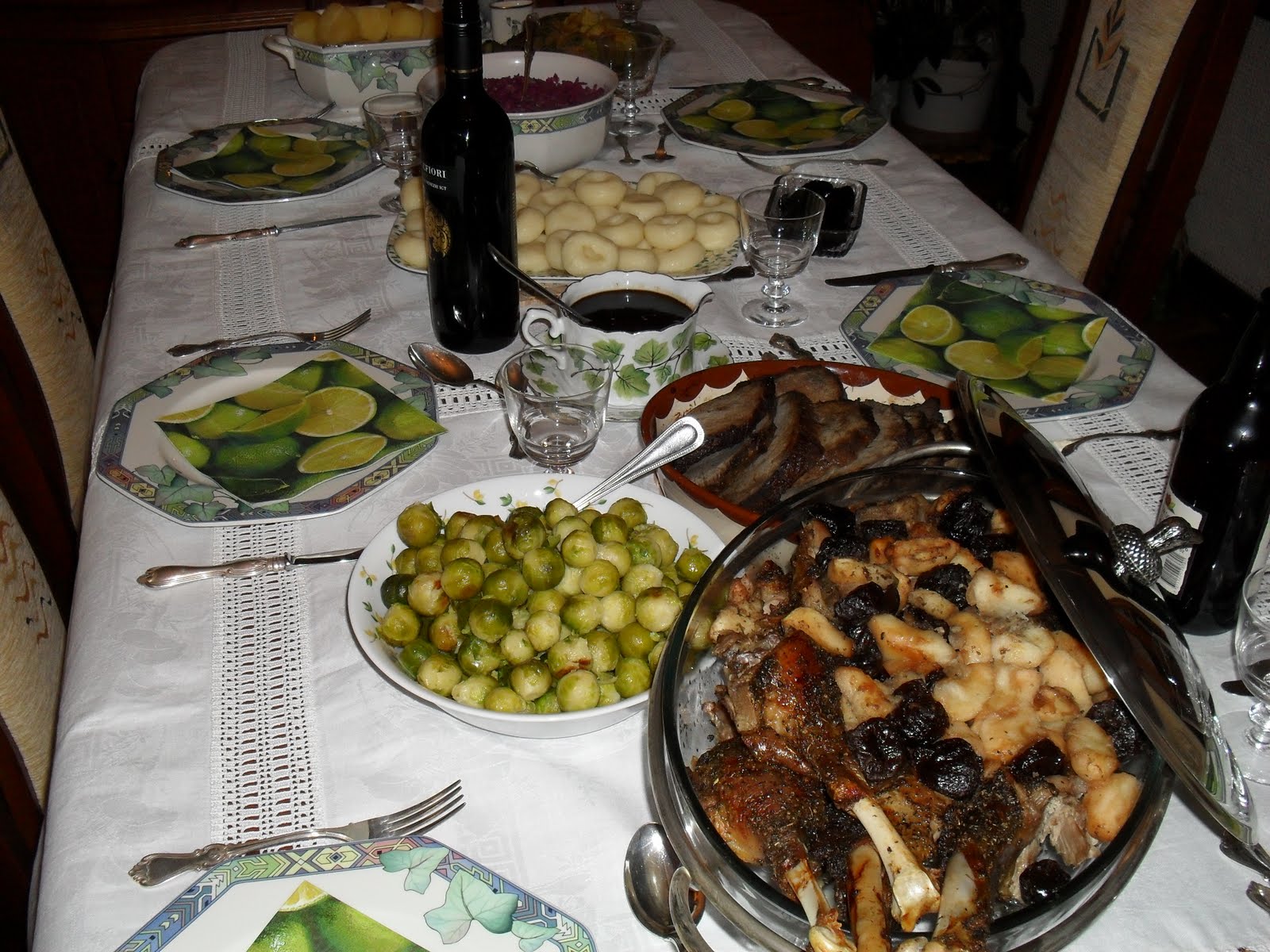
Last weekend I ate mounds of porter beef, stuffed goose and cheesecake. Ah, how I love such days of unfettered hedonism.
Cheat days and Refeeds
In this article I'll be using "cheat day" and "feasts" interchangeably but they are both synonyms for short-term overfeeding of various durations and magnitudes. The same general principles will apply, more or less. A "refeed" is often used in the context of a structured diet approach. It tends to be more strict and planned in terms of macronutrient composition (high-carb, low-fat.)
While I will discuss refeeds in brief, this article will mainly discuss overfeeding of a mixed diet - that is, what you should take into consideration on Thanksgiving, at the Christmas dinner table, or any other occasion where you will be presented with lots of tasty foods.
While I will discuss refeeds in brief, this article will mainly discuss overfeeding of a mixed diet - that is, what you should take into consideration on Thanksgiving, at the Christmas dinner table, or any other occasion where you will be presented with lots of tasty foods.
My plan is not to tell you exactly what to eat or how much of it - that would be absurd. I don't encourage someone to count calories on Thanksgiving Day or similar such occasions. Instead, I'll talk about some factors that will determine how much fat you end up putting on and how you can potentially reduce the time spent making up for your splurging.
First, let's look at the general effects of overfeeding and do some myth debunking in the process.
Effects of Overfeeding
First, let's look at the general effects of overfeeding and do some myth debunking in the process.
Effects of Overfeeding
I tend to look at cheat days and feasts mostly as psychological relief and fun, but you'll often see some overly optimistic claims about cheat days being made in the fitness community; how it boosts your metabolic rate and tricks your body into "fat burning mode" for the rest of the week. There's some truth to this, but the real impact of cheat days are exaggerated if you look at the numbers you're dealing with.
Studies on overfeeding shows that metabolic rate typically increases about 6-8% for up to 24 hours after feeding. There's also large differences in between individuals, illustrated by the fact that the magnitude of the increase ranges from 3-10%. Those prone to obesity ("thrifty" phenotypes) tend to be in the lower range (3%), while the naturally lean ("spendthrifty" phenotype) tend to be in the upper range (10%). Either way, from a fat loss perspective it's not really justified to eat thousands of surplus calories to burn a few hundred calories extra.
The other argument, about tricking your body into fat-loss mode, usually alludes to the effect of overfeeding carbs on leptin. For a lean person, or for someone one a prolonged dieting stint, low leptin is an issue. This hormone, the king of hunger regulation, controls metabolic rate, appetite, motivation and libido, among other things. Leptin drops whenever your body senses a calorie deficit and when fat mass is lost.
The reverse happens when your body senses a calorie surplus. A surplus temporarily boosts leptin, which leads to downstream effects on fat oxidation, thyroid, dopamine and testosterone. In the context of dieting, refeeds are therefore beneficial.
However, similar to the effects of overfeeding on metabolic rate, a leptin-boost is also rather transient and drops again once you resume your diet and your body senses the deficit. It's for this reason I prefer to use frequent but moderate overfeeding, or refeeds, as part of the Leangains approach. Usually in conjunction with weight training to take advantage of the anabolic effects.
What macronutrient causes the greatest boost in leptin calorie per calorie? The hierarchy looks like this:
1. Carbohydrate. (Glucose - not sucrose or fructose.)
2. Protein. Glucose is superior to protein, but I suspect it might be a better choice to sucrose or fructose. (I'm quite sure that protein hasn't been compared to sucrose and fructose, but I'll look into it just in case.)
3. Dietary fat.
4. Alcohol. Ethanol has not been directly compared to the other macronutrients. However, the effect is a negative one. While one study actually found a positive effect on leptin, most studies point towards an inhibitory effect. Strangely, a reverse effect has been seen in women from red wine. I wonder if this has something to do with the fact that alcohol consumption is associated with lower body weights in women but not men. I'll have to look into that.
Due to the superior effects of carbs on leptin, and leptin's downstream effects on metabolism and anabolic hormones, a high-carb, moderate-protein and low-fat refeed is traditionally recommended for dieting purposes.
Lyle Mcdonald has written a great deal on this topic, most extensively in "The Ultimate Diet 2.0." Though I am no fan of the diet itself, the book is a tremendous resource for anyone interested in the physiology of dieting and its impact on various hormonal parameters.
Lyle has also written a lengthy and detailed article series on leptin. I highly recommend it if this topic piques your interest: "Body Weight Regulation: Leptin Part 1."
However, a low-fat, high-carb refeed is obviously not so doable during Thanksgiving Day, Christmas, or any other such occasions. A few different factors should be taken into account on cheat days and feasts.

Rest assured that I have documented my recent cheesecake mastery in great detail. This time I used an ancient and dark technique that is not to be taken lightly. I'll tell you more about it in the near future.
Nutrient Metabolism: A Quick Primer
This is a quick primer on nutrient metabolism, as it will help you understand some of the concepts discussed later on.
The easiest way to think about nutrient metabolism is in terms of the Respiratory Quotient (RQ) and insulin. They are associated - when insulin is high, RQ is high, and vice versa. Here's a quote from "Intermittent Fasting and Stubborn Body Fat":
"After you eat, insulin and fatty acids are elevated. You are in the fed state and there's zero fat burning going on. Your body is relying completely on glucose oxidation during the hours following the meal."
This doesn't mean that you'll be burning more body fat if you follow a low-carb high fat diet, or that you'll never burn fat on high-carb diets. In energy balance, 24-hour RQ is reflective of the macrocomposition of the diet rather than fat gain or fat loss per se. Dietary fat has insulin-independent storage mechanisms (ASP) and "fat balance" (net storage of dietary fat) is primarily dictated by total calorie intake at the end of the day. The time course and trend in substrate metabolism will be different dependent of the carb:fat-ratio, but not the net effect.
Key point
Overfeeding elevates RQ for several hours - up to a day even - and indicates that glucose metabolism is dominant. Since glucose metabolism is high, fat burning is low or insignificant. This metabolic state allows net storage of dietary fat. Carbs, protein and alcohol all elevate RQ and affects fat burning negatively. Dietary fat does not affect RQ but has insulin-independent ways of getting into fat cells.
Knowing this is, are there some ways to limit fat gain in mixed-diet overfeeding or is it all about calories? To answer this, let's look at the energy costs for fat storage of various macronutrients.
Knowing this is, are there some ways to limit fat gain in mixed-diet overfeeding or is it all about calories? To answer this, let's look at the energy costs for fat storage of various macronutrients.
Energy Cost of Fat Storage: The Macronutrient Hierarchy
During overfeeding, surplus calories are stored as fat with a great deal of varying efficacy.
(From most likely to be stored as fat in adipose tissue during overfeeding to least likely.)
1. Dietary fat.
The energy cost for storage of dietary fat is minimal (0-2% depending on saturation.)
2. Carbohydrate.
The conversion of carbs to fat, de novo lipogenesis (DNL), is hardly significant in humans and usually only occurs when glycogen stores are saturated (i.e. prolonged high-carb overfeeding). This does not matter much in practical terms, as there will be plenty of dietary fat in mixed-diet overfeeding. Carbs promote fat gain by reducing fat oxidation, as explained before. There's some variance between individuals here, based on genetics, metabolic state and habitual diet-patterns. Enzymes that modulate DNL are up-regulated in habitual high-carb diets and in the obese. Another factor that play a role is insulin sensitivity. There are similar individual aspects to the storage of dietary fat as well (mediated by LPL and ASP.)
In metabolically healthy humans, the energy cost for DNL is approximately 25%. In practical terms, this means that 3 out of 4 calories can be used for fat synthesis once a "carbohydrate surplus" is achieved (after saturated glycogen stores). Given that glycogen stores are never full in conditions of energy balance, people have a large "carb-sink" to use up before carbs contribute to fat gain directly. (Until then, the effect of carbs is indirect via suppression of fat metabolism. Am I being redundant yet?)
The above is in particular reference to glucose; sucrose and fructose are more lipogenic due to some differences in metabolic pathways. Fructose do not go to muscle glycogen stores, but to liver glycogen - and this glycogen depot is significantly smaller than muscle glycogen. One study comparing DNL from glucose and sucrose overfeeding in lean and obese people, showed DNL to be 10% and 20% higher respectively after the sucrose-experiment.*
* From results: "The type of carbohydrate overfeeding (sucrose or glucose) had no significant effect on de novo lipogenesis in either subject group." Which means that the difference (10-20%) was not enough to be deemed significant from a scientific standpoint. Fructose-overfeeding has not be compared to glucose in a controlled study, but judging from this study, DNL would likely be substantial (sucrose is half fructose, half glucose)
3. Protein and alcohol.
Key point
This is a complicated topic to address in real life terms, as most people do not eat "protein" and "carbs" - they eat food, and food composition matters greatly. While protein is clearly superior to both fat and carbs, a whey shake likely provides less satiety on a calorie-per-calorie basis than - for example - an equicaloric amount of fibrous veggies, even though the former is lower in protein and higher in carbs. Similarly, an equicaloric amount of steak and whole eggs is more satiating in both the long- and short-term than chicken and rice.
Adding to that, there's a good measure of difference in between individuals, as evidenced with the varying amounts of success people have with high or low-carb diets respectively.
Further complicating the issue, there's the "hedonic" aspect to consider. Simply put, a tasty and/or sweet protein, carb, or fat-based meal might affect how much you end up eating.
With that in mind, here's what research shows.
Protein is superior to carbs and fat intake in both short-term and long-term hunger suppression. This seems to be related to not only a stronger effect on appetite-regulating hormones (i.e. ghrelin, PYY and GLP-1), but also to its high TEF.
2. Carbs and fat.
3. Alcohol.
Key point
1. Don't stress it.
2. Create a calorie buffer.

Protein fluff; I mistakenly wrote that you'd need casein or milk-protein isolate for this, but people report getting respectable fluffs with some whey protein brands as well. Give it a go - you'll love it.
3. Protein priority.
4. Limit choices, not amounts.
In metabolically healthy humans, the energy cost for DNL is approximately 25%. In practical terms, this means that 3 out of 4 calories can be used for fat synthesis once a "carbohydrate surplus" is achieved (after saturated glycogen stores). Given that glycogen stores are never full in conditions of energy balance, people have a large "carb-sink" to use up before carbs contribute to fat gain directly. (Until then, the effect of carbs is indirect via suppression of fat metabolism. Am I being redundant yet?)
The above is in particular reference to glucose; sucrose and fructose are more lipogenic due to some differences in metabolic pathways. Fructose do not go to muscle glycogen stores, but to liver glycogen - and this glycogen depot is significantly smaller than muscle glycogen. One study comparing DNL from glucose and sucrose overfeeding in lean and obese people, showed DNL to be 10% and 20% higher respectively after the sucrose-experiment.*
* From results: "The type of carbohydrate overfeeding (sucrose or glucose) had no significant effect on de novo lipogenesis in either subject group." Which means that the difference (10-20%) was not enough to be deemed significant from a scientific standpoint. Fructose-overfeeding has not be compared to glucose in a controlled study, but judging from this study, DNL would likely be substantial (sucrose is half fructose, half glucose)
3. Protein and alcohol.
The energy cost for storage of amino acids and ethanol as fat are very hard to quantify for methodological, biochemical and (in the case of ethanol), ethical reasons. No controlled studies has been performed. However, it's safe to conclude that these two substrates serve as very poor precursors for fatty acid synthesis for a few different reasons.
First of all, the thermic effect of the separate macronutrients is 20-30% for protein, ~5% for carbohydrate, and 0–3% for fat. Total TEF is generally said to be 10% of total calorie intake, but this number is for the standard American diet, which is low in protein, relatively speaking.TEF for alcohol is harder to estimate, as values range between 10-30% in various studies. I talked about alcohol and TEF in "The Truth About Alcohol, Fat Loss and Muscle Growth":
"Alcohol is labeled as 7.1 calories per gram, but the real value is more along the lines of 5.7 calories due to the thermic effect of food (TEF) which is 20% of the ingested calories. This makes the TEF of alcohol a close second to protein (20-30% depending on amino acid composition)."
In a similar vein, the real caloric value of protein would be closer to 3 kcal/g and not 4 kcal/g as it's currently labelled. Indeed, arguments that we revamp nutritional labeling to more closely match the true metabolic impact by various macronutrients has been made. Livesey proposed that protein should be counted as 3.2 kcal/g, for example.
Further complicating the issue in regards to quantifying fat synthesis from protein is the amino acid composition of the protein consumed, as it varies depending on the protein source. Amino acids are either glucogenic, ketogenic, or both, and use different metabolic pathways for fat synthesis. For example, a glucogenic amino acid must first be converted to glucose (de novo gluconegenesis) once it can contribute to fat synthesis via de novo lipogenesis, while a ketogenic amino acid can contribute via a more direct pathway (via acetyl-CoA).
I might revisit this topic again some day, as I've discussed it with some smart biochemists, but the key point here is that protein cannot contribute to fat gain directly to any meaningful degree. Even in highly artificial scenarios, such as overfeeding thousands of calories of pure protein, would yield fat gain that is a lot less than what's estimated from traditional formulas (i.e. 700 calorie surplus of fat or carbs = +0.1 kg weight gain is not true for a protein surplus).
Similar to carbohydrate, protein and alcohol act similarly as carbs in regards to metabolism. That is, they blunt fat oxidation. However, while carbs can contribute to fat gain directly once glycogen stores are full, protein and ethanol are unlikely to do so. (Ethanol metabolism was explained in detail in "The Truth About Alcohol, Fat Loss and Muscle Growth".)
First of all, the thermic effect of the separate macronutrients is 20-30% for protein, ~5% for carbohydrate, and 0–3% for fat. Total TEF is generally said to be 10% of total calorie intake, but this number is for the standard American diet, which is low in protein, relatively speaking.TEF for alcohol is harder to estimate, as values range between 10-30% in various studies. I talked about alcohol and TEF in "The Truth About Alcohol, Fat Loss and Muscle Growth":
"Alcohol is labeled as 7.1 calories per gram, but the real value is more along the lines of 5.7 calories due to the thermic effect of food (TEF) which is 20% of the ingested calories. This makes the TEF of alcohol a close second to protein (20-30% depending on amino acid composition)."
In a similar vein, the real caloric value of protein would be closer to 3 kcal/g and not 4 kcal/g as it's currently labelled. Indeed, arguments that we revamp nutritional labeling to more closely match the true metabolic impact by various macronutrients has been made. Livesey proposed that protein should be counted as 3.2 kcal/g, for example.
Further complicating the issue in regards to quantifying fat synthesis from protein is the amino acid composition of the protein consumed, as it varies depending on the protein source. Amino acids are either glucogenic, ketogenic, or both, and use different metabolic pathways for fat synthesis. For example, a glucogenic amino acid must first be converted to glucose (de novo gluconegenesis) once it can contribute to fat synthesis via de novo lipogenesis, while a ketogenic amino acid can contribute via a more direct pathway (via acetyl-CoA).
I might revisit this topic again some day, as I've discussed it with some smart biochemists, but the key point here is that protein cannot contribute to fat gain directly to any meaningful degree. Even in highly artificial scenarios, such as overfeeding thousands of calories of pure protein, would yield fat gain that is a lot less than what's estimated from traditional formulas (i.e. 700 calorie surplus of fat or carbs = +0.1 kg weight gain is not true for a protein surplus).
Similar to carbohydrate, protein and alcohol act similarly as carbs in regards to metabolism. That is, they blunt fat oxidation. However, while carbs can contribute to fat gain directly once glycogen stores are full, protein and ethanol are unlikely to do so. (Ethanol metabolism was explained in detail in "The Truth About Alcohol, Fat Loss and Muscle Growth".)
Key point
In mixed-diet overfeeding, macrocomposition matters. In comparing two diets at the same calorie intake - say 5000 calories - the one with the highest percentage of calories from protein yields the least fat gain. This is mainly explained by TEF and the poor efficacy with which protein can contribute directly to fat synthesis.
What other factors need to be considered for someone who wants to minimize fat gain during overfeeding?
Satiety: Effects of Macronutrients
What other factors need to be considered for someone who wants to minimize fat gain during overfeeding?
Satiety: Effects of Macronutrients
This is a complicated topic to address in real life terms, as most people do not eat "protein" and "carbs" - they eat food, and food composition matters greatly. While protein is clearly superior to both fat and carbs, a whey shake likely provides less satiety on a calorie-per-calorie basis than - for example - an equicaloric amount of fibrous veggies, even though the former is lower in protein and higher in carbs. Similarly, an equicaloric amount of steak and whole eggs is more satiating in both the long- and short-term than chicken and rice.
Adding to that, there's a good measure of difference in between individuals, as evidenced with the varying amounts of success people have with high or low-carb diets respectively.
Further complicating the issue, there's the "hedonic" aspect to consider. Simply put, a tasty and/or sweet protein, carb, or fat-based meal might affect how much you end up eating.
With that in mind, here's what research shows.
1. Protein.
Protein is superior to carbs and fat intake in both short-term and long-term hunger suppression. This seems to be related to not only a stronger effect on appetite-regulating hormones (i.e. ghrelin, PYY and GLP-1), but also to its high TEF.
2. Carbs and fat.
Up until a few years ago, carbs were generally regarded as superior to fat in terms of satiety on a calorie-per-calorie basis. The problem with the studies this belief was based on was the short duration used for measuring appetite-regulating hormones and subjective measures of satiety and fullness. In recent years, better methodological approaches show a more nuanced picture. In summary, it can be said that carbs suppress appetite better in the short-term, while fat wins out in the long-term.
The carbohydrate hierarchy in terms of best appetite-suppression from source: Glucose --> sucrose --> fructose.
With regards to satiety from different fatty acids, there's no significant difference between saturated, monounsaturated or polyunsaturated fat. (Another study showed similar results.)
The carbohydrate hierarchy in terms of best appetite-suppression from source: Glucose --> sucrose --> fructose.
With regards to satiety from different fatty acids, there's no significant difference between saturated, monounsaturated or polyunsaturated fat. (Another study showed similar results.)
3. Alcohol.
From "The Truth About Alcohol, Fat Loss and Muscle Growth":
"Is higher TEF a reasonable explanation for lower body fat percentage in regular drinkers? We need to consider that alcohol does not affect satiety like other nutrients. The disinhibition of impulse control that follows intoxication may also encourage overeating. Ever come home from a party in the middle of the night and downed a box of cereals? That's what I mean."
Adding to that, note what I wrote about leptin earlier:
"Ethanol has not been directly compared to the other macronutrients. However, the effect is a negative one. While one study actually found a positive effect on leptin, most studies point towards an inhibitory effect.
Alcohol clearly provides nothing in regards to satiety and may even encourage overeating by affecting impulse control and/or leptin. For occasions where large quantities of alcohol is consumed, you may find the strategy outlined in my article about alcohol useful ("How to lose fat or prevent fat gain when drinking.")
"Is higher TEF a reasonable explanation for lower body fat percentage in regular drinkers? We need to consider that alcohol does not affect satiety like other nutrients. The disinhibition of impulse control that follows intoxication may also encourage overeating. Ever come home from a party in the middle of the night and downed a box of cereals? That's what I mean."
Adding to that, note what I wrote about leptin earlier:
"Ethanol has not been directly compared to the other macronutrients. However, the effect is a negative one. While one study actually found a positive effect on leptin, most studies point towards an inhibitory effect.
Alcohol clearly provides nothing in regards to satiety and may even encourage overeating by affecting impulse control and/or leptin. For occasions where large quantities of alcohol is consumed, you may find the strategy outlined in my article about alcohol useful ("How to lose fat or prevent fat gain when drinking.")
Key point
Food composition, individual differences and hedonic aspects aside, protein is superior to carbs and fat in terms of satiety and appetite-suppression.
I've now covered what you need to know about macronutrients in order to make an informed decision about food choices on cheat days or holiday eating sprees. Let's look at how this information can be put to use in practice.
Cheat Day Strategies
I've now covered what you need to know about macronutrients in order to make an informed decision about food choices on cheat days or holiday eating sprees. Let's look at how this information can be put to use in practice.
Cheat Day Strategies
Here are some strategies you might find useful. They are how I approach cheat days and holiday feasts, and what I encourage my clients to do. First, however let me address what you should not be doing.
1. Don't stress it.
Some people "pre-compensate" holidays by training themselves into the ground and/or reduce calories significantly in the days leading up to the feast. I highly recommend you do not do this, since I can almost guarantee that you will end up eating a lot more than you would normally if you approach holidays or feasts in a "deprived" mindset.
I touched on this issue in "Intermittent Fasting, Set-Point and Leptin." On the folly of "planning" a big meal or refeed at the end of the diet instead of taking it nice and easy, I said:
"...I would sit and plan my big refeed meal at the end of the diet. I would count every day like an inmate counting the days to his release from prison. And once I reached my goal, I would go bonkers, eat a bunch of crap, take several steps back and then go back to dieting in a feeble attempt to make up for my screwed up 'refeed' (aka binge in my case)."
Take it nice and slow - don't do anything stupid in the days before. No need to train your butt off and deplete glycogen, no need to up your cardio to two hours a day. You'll just end up eating more junk if you do. This is due to a combination of psychology and physiology (i.e. plummeting leptin.)
The topic of calorie-compensation is a well-known phenomenon; it's part of why exercise doesn't produce the predicted weight loss in some people. This is based on studies on Average Joes and Janes, and do not apply in most circumstances to the people reading this article. However, with specific reference to holiday eating and cheat days, I definitely notice a tendency in myself to eat more than I normally would if I train or reduce calories in the day leading up to the occasion.
Surely some people get away with it and don't compensate but in my experience those who think they are exempt from the rule are the ones to which the rule applies.
I touched on this issue in "Intermittent Fasting, Set-Point and Leptin." On the folly of "planning" a big meal or refeed at the end of the diet instead of taking it nice and easy, I said:
"...I would sit and plan my big refeed meal at the end of the diet. I would count every day like an inmate counting the days to his release from prison. And once I reached my goal, I would go bonkers, eat a bunch of crap, take several steps back and then go back to dieting in a feeble attempt to make up for my screwed up 'refeed' (aka binge in my case)."
Take it nice and slow - don't do anything stupid in the days before. No need to train your butt off and deplete glycogen, no need to up your cardio to two hours a day. You'll just end up eating more junk if you do. This is due to a combination of psychology and physiology (i.e. plummeting leptin.)
The topic of calorie-compensation is a well-known phenomenon; it's part of why exercise doesn't produce the predicted weight loss in some people. This is based on studies on Average Joes and Janes, and do not apply in most circumstances to the people reading this article. However, with specific reference to holiday eating and cheat days, I definitely notice a tendency in myself to eat more than I normally would if I train or reduce calories in the day leading up to the occasion.
Surely some people get away with it and don't compensate but in my experience those who think they are exempt from the rule are the ones to which the rule applies.
2. Create a calorie buffer.
On the day of the feast, you'll want to make sure you have a buffer saved up for the occasion. You'll either want to reduce your meal frequency as much as you can or reduce your calorie intake in the meals leading up to the feast.
If possible, fast up until the big meal. This is easy and a bit of a no-brainer for those used to intermittent fasting. If you are used to 16-hour fasts per my usual recommendations, it should not be an issue to prolong it further, i.e. doing a 20-24 hour fast ("Eat Stop Eat"-style).
Make sure you eat a high-protein meal on the day before, as usual - preferably with fiber to slow down absorption. That's also a good practice for regular Leangains-fasts but it's even more so important for >16-hour fasts to avoid hunger pangs in my experience. Should hunger become unbearable, which I've never experienced even during prolonged fasting, drink some coffee and/or eat a plate of fibrous vegetables.
The second best strategy if you're not used to intermittent fasting is to use a "high-protein low-everything-else"-diet leading up to the feast. This will maximize satiety for the lowest amount of calories. Here's an example assuming you have your big feast planned for dinner or around evening, 5-8 PM or so:
10-12 PM: 40-50 g protein, trace carbs and fat (~200-250 kcal)
2-3 PM: Same as above.
5-8 PM: The grand feast. Be it Thanksgiving Dinner, cheesecake mastery or whatever else you have planned that involves eating yourself silly.
For a regular guy, the above plan allows about 2000 calories of goodness during the big meal until any significant fat gain occurs. Still, if you're like me you can eat a whole lot more than that in one sitting. Next we'll have a look at what you can do for damage control during the meal itself.
By the way, here's a pro tip: If you don't know how to make a "high-protein, low-everything-else"-diet bearable, you need to try protein fluff. I've yet to encounter a more satiating and tasty high-protein treat.
If possible, fast up until the big meal. This is easy and a bit of a no-brainer for those used to intermittent fasting. If you are used to 16-hour fasts per my usual recommendations, it should not be an issue to prolong it further, i.e. doing a 20-24 hour fast ("Eat Stop Eat"-style).
Make sure you eat a high-protein meal on the day before, as usual - preferably with fiber to slow down absorption. That's also a good practice for regular Leangains-fasts but it's even more so important for >16-hour fasts to avoid hunger pangs in my experience. Should hunger become unbearable, which I've never experienced even during prolonged fasting, drink some coffee and/or eat a plate of fibrous vegetables.
The second best strategy if you're not used to intermittent fasting is to use a "high-protein low-everything-else"-diet leading up to the feast. This will maximize satiety for the lowest amount of calories. Here's an example assuming you have your big feast planned for dinner or around evening, 5-8 PM or so:
10-12 PM: 40-50 g protein, trace carbs and fat (~200-250 kcal)
2-3 PM: Same as above.
5-8 PM: The grand feast. Be it Thanksgiving Dinner, cheesecake mastery or whatever else you have planned that involves eating yourself silly.
For a regular guy, the above plan allows about 2000 calories of goodness during the big meal until any significant fat gain occurs. Still, if you're like me you can eat a whole lot more than that in one sitting. Next we'll have a look at what you can do for damage control during the meal itself.
By the way, here's a pro tip: If you don't know how to make a "high-protein, low-everything-else"-diet bearable, you need to try protein fluff. I've yet to encounter a more satiating and tasty high-protein treat.

Protein fluff; I mistakenly wrote that you'd need casein or milk-protein isolate for this, but people report getting respectable fluffs with some whey protein brands as well. Give it a go - you'll love it.
3. Protein priority.
In the short-term, splurging on high-carb, high-protein and low-fat foods would lead to insignificant fat gain, as glycogen stores would soak up most of the carbs (which would severely limit DNL.) However, such an approach is not very appealing, or realistic, if you want to experience the splendor of Thanksgiving and Christmas. I don't know about you, but I never think of the gifts on Christmas - I think of all the food I get to eat :D
Here's how I suggest you approach the eating spree that is about to ensue:
* Vary fat and carb intake to personal preference but make protein a high priority. "Protein first - carbs and fat for taste". If you think of your meals like this, it'll automatically raise the percentage of protein during the meal, increasing TEF and satiety.
* In regards to the order which you eat your foods, I suggest mainly focusing on protein, fat and volume (i.e. veggies) first and then add carbs in later. In my personal experience, this tends to maximize both short-term and long-term satiety and reduce calorie intake later on. Fat has a latent effect on appetite-suppression, so eating more fat earlier on makes sense.
* Do not neglect food volume - if possible, try to fill up on veggies in your early meals and save the more calorie-dense stuff for later on.
* Sucrose, fructose and liquid calories, i.e. treats, cakes and alcohol, should preferably be added in last, when you're full from the main meal(s).
Here's how I suggest you approach the eating spree that is about to ensue:
* Vary fat and carb intake to personal preference but make protein a high priority. "Protein first - carbs and fat for taste". If you think of your meals like this, it'll automatically raise the percentage of protein during the meal, increasing TEF and satiety.
* In regards to the order which you eat your foods, I suggest mainly focusing on protein, fat and volume (i.e. veggies) first and then add carbs in later. In my personal experience, this tends to maximize both short-term and long-term satiety and reduce calorie intake later on. Fat has a latent effect on appetite-suppression, so eating more fat earlier on makes sense.
* Do not neglect food volume - if possible, try to fill up on veggies in your early meals and save the more calorie-dense stuff for later on.
* Sucrose, fructose and liquid calories, i.e. treats, cakes and alcohol, should preferably be added in last, when you're full from the main meal(s).
4. Limit choices, not amounts.
Studies show that when people are presented with multiple food-choices, they eat more. In fact, calorie intake during a buffet scales almost linearly with the amount of different foods to choose from. If I offered you unlimited amounts of turkey and cheesecake, you'd likely only eat so much of it before you felt "full" and satisfied.
However, if I threw a third food into the mix, like potatoes or chocolate pudding, you'd end up eating a lot more - even if you weren't a fan of potatoes or chocolate pudding in normal circumstances. Humans are wired a bit funny and some behaviors are maladaptive in our environment of excesses. Having a taste of everything was a good strategy during our evolution, since it protected again micronutrient-deficiencies.
By "mentally limiting" the food choices you allow yourself, i.e. only eating that which you absolutely love and crave, can be a very effective strategy in regulating calorie intake without feeling deprived. Remember, you don't need to taste of every damn food or treat that is offered. Stick to that which you truly enjoy eating and skip the rest.
However, if I threw a third food into the mix, like potatoes or chocolate pudding, you'd end up eating a lot more - even if you weren't a fan of potatoes or chocolate pudding in normal circumstances. Humans are wired a bit funny and some behaviors are maladaptive in our environment of excesses. Having a taste of everything was a good strategy during our evolution, since it protected again micronutrient-deficiencies.
By "mentally limiting" the food choices you allow yourself, i.e. only eating that which you absolutely love and crave, can be a very effective strategy in regulating calorie intake without feeling deprived. Remember, you don't need to taste of every damn food or treat that is offered. Stick to that which you truly enjoy eating and skip the rest.
Subscribe to:
Posts (Atom)


Subscribe in a Reader


 Posts
All Comments
Posts
All Comments
FeedBurner FeedCount


Recommended Reading
Lame Title, Good Book


Recommended Reading
Awesome Recipes for The Paleo Diet
 >
>Recommended Reading
Fat Loss Made Easy

Great Interval Timer


